
Description
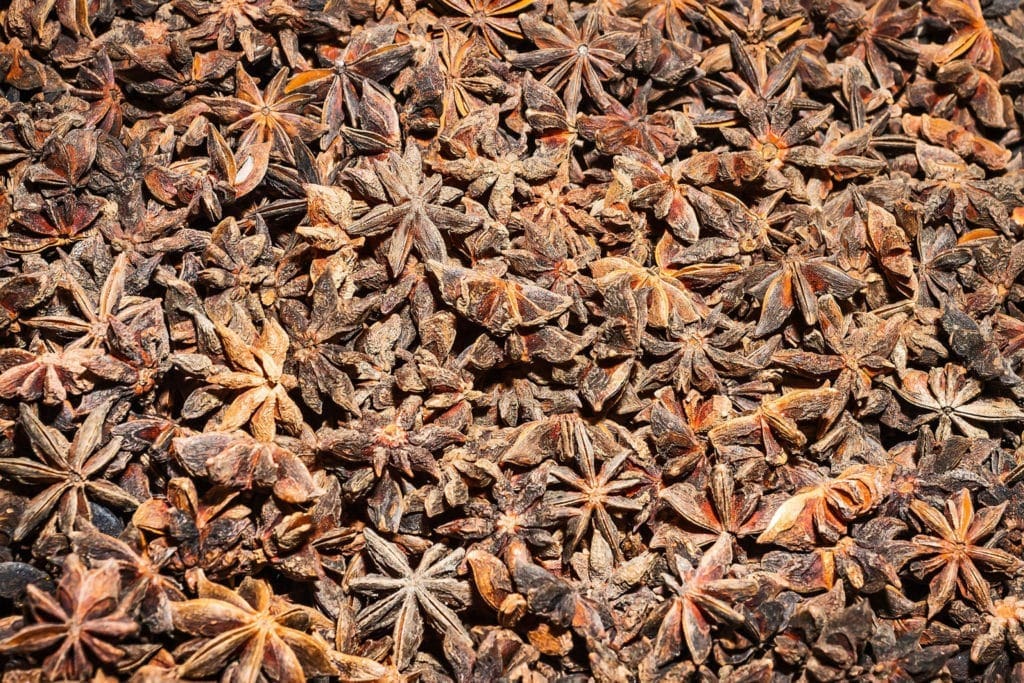
Anise Oil Chinese is derived from the dried and crushed seeds of the Illicium verum herb, better known as “Anise Star” or “Aniseed.” Native to Southwest Asia and the Mediterranean, anise is one of the first herbs cultivated for use in flavor and fragrance, with records of its usage dating back more than 4,000 years ago in Ancient Egyptian texts. The aroma of Anise Oil is sweet and clean, with an intense licorice note that is highly reminiscent of the crushed seeds. In flavor, the material imparts a soft sweetness that is rich and powerful but not overbearing. Anise Oil is a vital component of countless foods and medicines including licorice, candy, baked goods, cough drops, and other pharmaceuticals.
CAS#: 8007-70-3
FEMA: 2094
Principle Constituents: Trans Anethole
Refractive Index: 1.5530 – 1.5600
Specific Gravity: 0.9780 – 0.9880
Latest market information
Aug 28th, 2025
Demand remains low, keeping prices stable. No major changes expected in the near term.
Jul 14th, 2025
Anise oil is derived from two different botanical sources, both rich in anethole which is the key compound responsible for its sweet, spicy character reminiscent of fennel and licorice. Widely used across the flavor, fragrance, oral care, and pharmaceutical sectors, the oil’s origin can significantly influence its availability and cost.
The more widely available and cost-effective material is produced from the fruit, seeds, and leaves of Illicium verum, commonly known as star anise. This evergreen tree is native to Southeast Asia, with major production centered in China and Vietnam. Notably, star anise played a critical role between 2000 and 2010 as the starting material for Tamiflu™ which is an antiviral drug that was developed during global outbreaks of influenza. With Tamiflu now produced by a different process, pressure on star anise supply has eased, and the market has returned to a more balanced state.
The second, less common and typically more expensive variety is extracted from Pimpinella anisum, a flowering plant related to parsley and cultivated mainly in the Mediterranean region. Its seeds are used both as a culinary spice and are steam distilled to produce essential oil.
Global supply is currently stable.
Mar 20th, 2025
Prices increasing.
Region
At the Source
-

Appearance:Pale Yellow Liquid
-

Part Of Plant:Seed
-

Extraction:Distillation
-

Synonyms:Star Anise Oil
All scientific, regulatory and technical data is a guide for product identification purposes only. Only Berjé authorized documentation is to be used for validation and confirmation. These documents can be provided upon request.