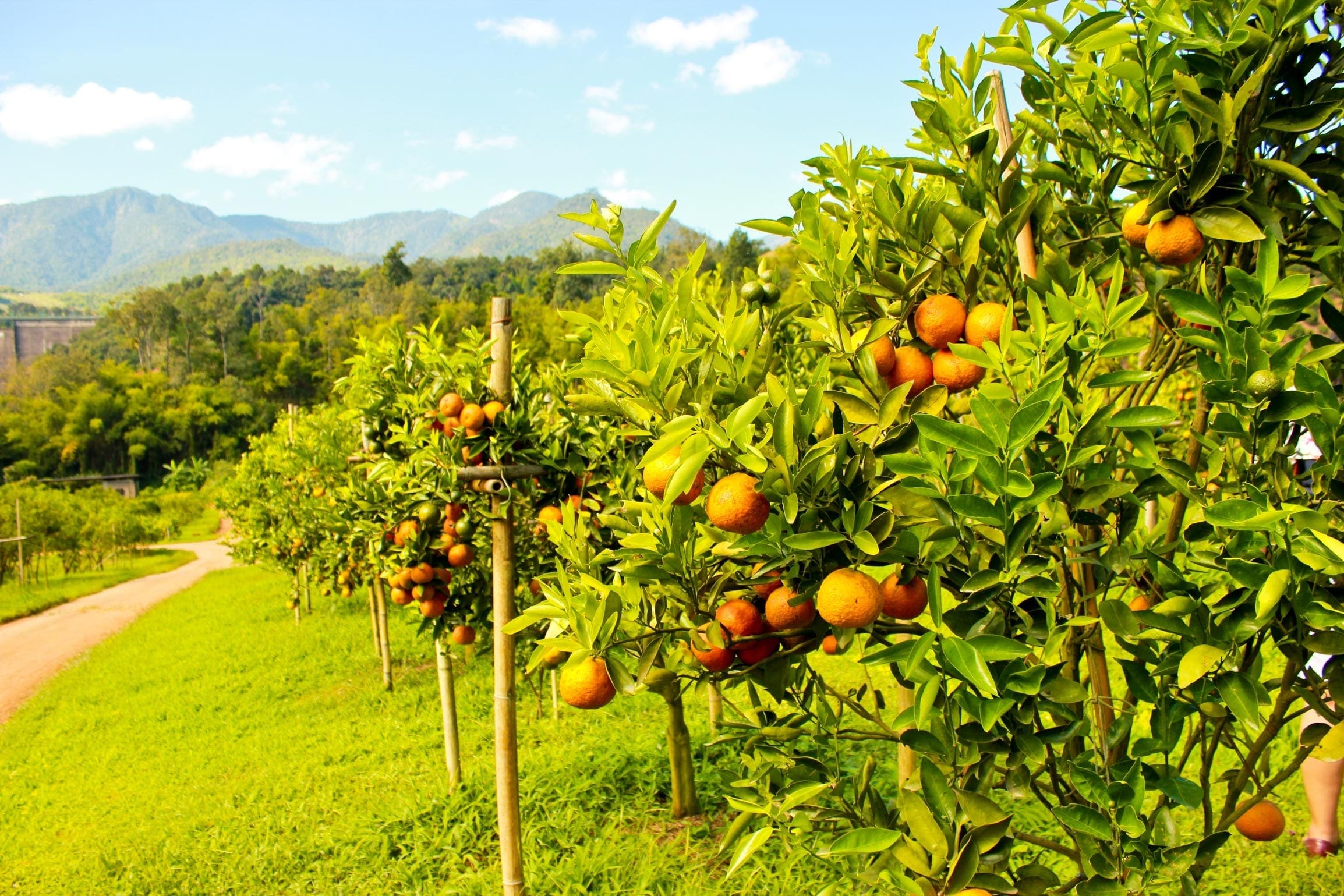
Orange Oil is cold pressed from the peel of Citrus x sinensis, also known as the sweet orange. Its fresh, familiar profile makes it one of the most widely used citrus oils across flavor and fragrance.
Brazil remains the main market and Fundecitrus has recently updated its forecast for the 2026/27 crop in the São Paulo and western Minas Gerais citrus belt at 263.15 million boxes, down 9.8% from the previous season. This is also below the ten-year average of around 300 million boxes. Hotter and drier conditions and the continuing spread of HLB (citrus greening) remain important challenges for growers. The picture in the juice market is rather different.
Global industrialized Orange Juice demand is forecast to fall by a further 3% in 2026/27. If realized, demand would be around 40% lower than a decade ago. Retail prices remain high in major markets despite the sharp fall in frozen concentrated orange juice (FCOJ) prices, which has continued to affect consumption, although major European retailers are beginning to reduce shelf prices to generate more consumer interest. Although global juice production is also expected to continue its fall, inventories are forecast to build again. Rabobank expects ending stocks to reach around 490,000 metric tons of FCOJ equivalent, the highest level for seven years.
Processors are consequently taking a cautious approach to fruit purchasing. For Orange Oil, this means the smaller crop cannot be considered in isolation. How much fruit is processed will be just as important to oil availability as the headline crop figure.
Florida also remains a much smaller producer than it once was following years of pressure from HLB, weather and declining citrus acreage. California, meanwhile, is much more strongly oriented toward the fresh fruit market, so a large crop does not necessarily mean a corresponding volume of fruit for oil production.